




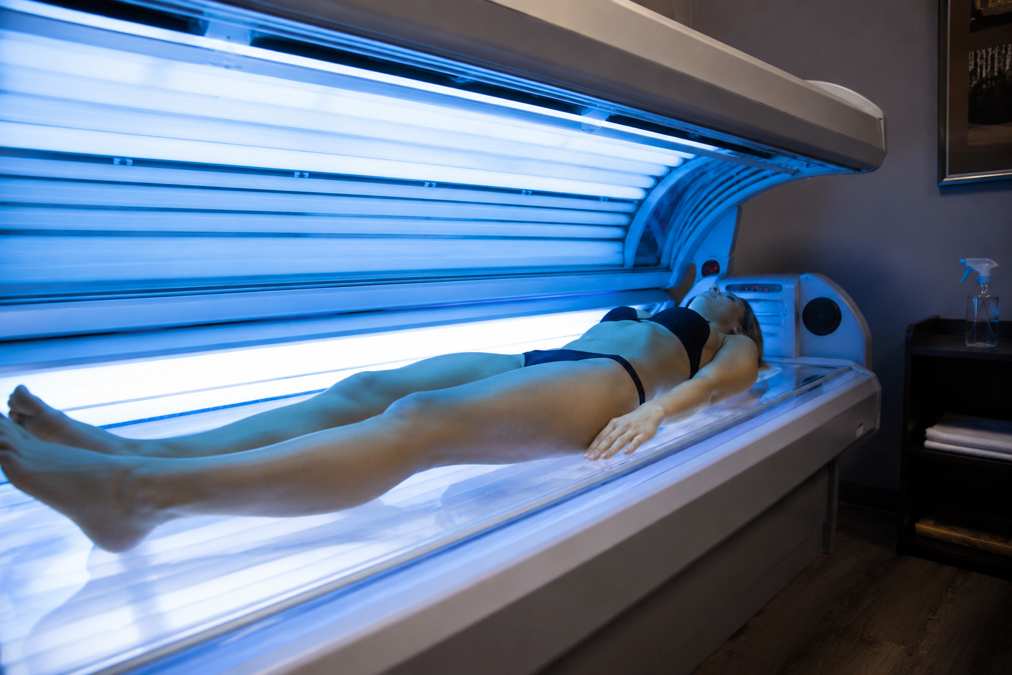
As tanning regains popularity on social media, dermatologists across the United States are warning that the renewed trend could have serious long-term health consequences. Medical experts say growing misinformation about tanning—particularly among younger Americans—is overshadowing decades of public health education about the risks of ultraviolet (UV) exposure and skin cancer.
Social Media Fuels a New Wave of Tanning Culture
Nichole Sims began using indoor tanning beds at age 15, saying the practice was common among her peers, especially before milestone events such as homecoming dances and prom.
Eight years later, she was diagnosed with melanoma, one of the most dangerous forms of skin cancer.
Since then, Sims has watched tanning become increasingly popular again, particularly on social media platforms where influencers often portray bronzed skin as both fashionable and desirable. She now shares her personal experience online in an effort to counter misleading claims that tanning improves mood or is essential for beauty.
“I just feel like our generation doesn’t really look into a lot of risks. They just kind of live in the moment,” Sims said.
Health experts say online trends have contributed to a broader resurgence of tanning among young adults. One widely viewed social media video featuring a creator sharing her “tanning secrets” and highlighting bikini tan lines has attracted more than 11 million views. In the comments, some users dismiss health concerns with remarks suggesting they would rather be tan than pale, regardless of potential consequences.
According to the American Cancer Society, more than 100,000 new melanoma cases are expected to be diagnosed in the United States in 2026, with approximately 8,500 deaths projected from the disease. Dermatologists say they are especially concerned that some online influencers continue promoting the use of tanning beds despite well-established health risks.
“Being young in the world we live in now, being tan and pretty, it goes together,” Sims said.
How Indoor Tanning Raises Melanoma Risk
Research Shows Significant DNA Damage
Researchers at Northwestern University Feinberg School of Medicine have been studying how indoor tanning affects skin cells at the molecular level. Led by Dr. Pedram Gerami, the research team found that people who used tanning beds faced nearly three times the risk of developing melanoma compared with individuals who had never used them.
To better understand why, researchers compared skin samples from tanning bed users and nonusers. They focused on melanocytes, the pigment-producing skin cells that can develop into moles, melanoma, or other forms of skin cancer.
When melanocytes are exposed to ultraviolet radiation, genetic mutations can occur. According to Gerami, tanning beds can emit more than 10 times the amount of UV radiation produced by natural sunlight.
The study found that melanocytes from tanning bed users experienced more than twice the DNA mutation rate observed in people whose UV exposure came only from outdoor sunlight.
“You only need like two or three (mutations) in the right place for it to turn into a melanoma,” Gerami said. “If you get one or two of them from the tanning bed use … it kind of just primes all these cells to be ready and that much closer to getting to melanoma.”
Young Adults More Likely to Believe Tanning Myths
Survey Highlights Gaps in Sun Safety Knowledge
A 2025 survey conducted by the American Academy of Dermatology found that Generation Z adults are less informed about sun protection than older age groups and are more likely to believe common misconceptions about tanning.
More than one in five young adults surveyed said they prioritized getting a tan over protecting their skin. More than half believed myths such as the idea that developing a “base tan” provides meaningful protection against future sunburn.
Dermatologists say misinformation circulating on social media is making the problem worse. Some online videos dismiss expert warnings about excessive UV exposure and falsely claim that sunscreen causes cancer. Others encourage people to tan during periods when the UV index is at its highest—the very times when public health officials recommend limiting outdoor exposure.
Experts stress that these messages contradict decades of scientific evidence linking excessive UV exposure to skin cancer, premature skin aging, and permanent skin damage.
“Tanning is sort of cool again … and all the education about skin cancer and skin aging is sort of taking a backseat for the younger generation,” said Dr. Anthony Rossi, a dermatologist at Memorial Sloan Kettering Cancer Center.
Health Experts Urge Greater Awareness
Dermatologists say the growing popularity of tanning serves as a reminder that appearance-focused trends can sometimes overshadow well-documented health risks. As melanoma rates remain a significant public health concern in the United States, medical professionals continue encouraging people to protect their skin from excessive UV exposure and to rely on evidence-based information rather than social media trends when making decisions about sun safety.

Charles Dickens is a contributor to Highlands Today, covering news, politics, business, technology, sport, entertainment, and lifestyle. He focuses on clear, accurate reporting and useful information that helps readers stay informed about current affairs and developments affecting their communities. His work highlights relevant stories, emerging trends, and important issues, presenting them in a balanced, accessible, and reader-friendly manner.