



NASA is preparing for a groundbreaking space servicing mission aimed at extending the operational life of one of its most important observatories. The agency and its commercial partners are set to launch a robotic spacecraft that will attempt to raise the orbit of the Neil Gehrels Swift Observatory, which has been gradually descending due to atmospheric drag.
The mission represents a significant milestone in satellite servicing technology and could help pave the way for future efforts to repair, refuel, or reposition spacecraft already operating in orbit.
Robotic Satellite to Reposition Swift Observatory
NASA’s Neil Gehrels Swift Observatory, a space telescope designed to study gamma-ray bursts and other high-energy cosmic events, has been slowly losing altitude as it encounters resistance from Earth’s upper atmosphere.
To address the issue, NASA awarded a contract in September 2025 to Katalyst Space, which developed a robotic servicing spacecraft known as LINK. The satellite is scheduled to launch aboard a Northrop Grumman Pegasus XL rocket.
The launch is currently targeted for Wednesday at 5:43 a.m. EDT after an earlier attempt was postponed because of unfavorable weather conditions.
Why Swift Is Losing Altitude
Even spacecraft operating hundreds of miles above Earth are affected by traces of the planet’s atmosphere. This atmospheric drag gradually slows satellites and lowers their orbits unless they have propulsion systems capable of maintaining altitude.
According to NASA, recent solar storm activity intensified the problem for Swift. Increased solar activity can heat and expand Earth’s upper atmosphere, creating additional drag on spacecraft in low Earth orbit and accelerating orbital decay.
As a result, Swift has been descending faster than mission planners originally anticipated.
LINK’s Mission: Raise the Telescope to a Higher Orbit
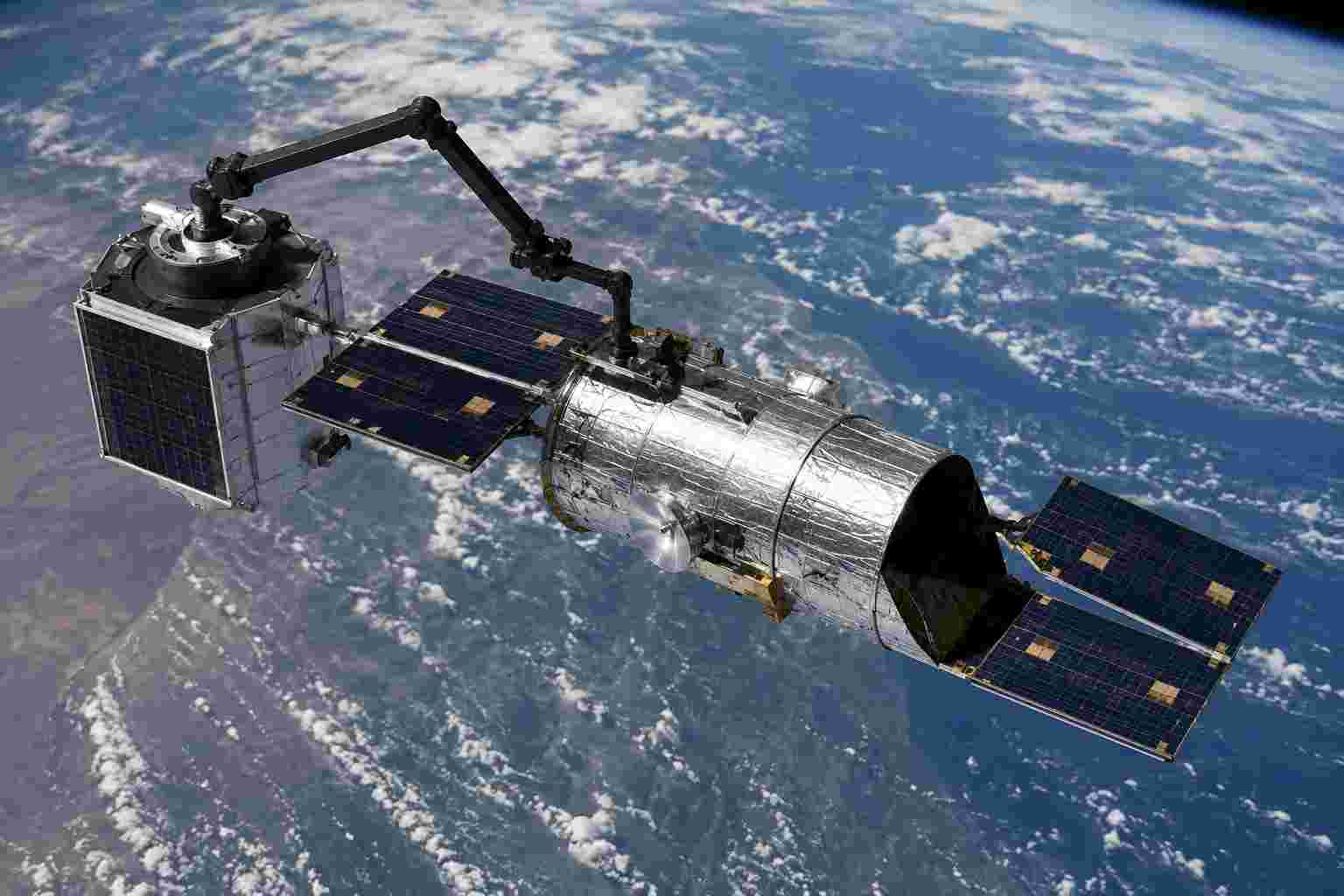
The LINK spacecraft has been designed specifically to perform robotic servicing operations in orbit. After reaching space, it will approach Swift, securely grapple the observatory using robotic arms, and gradually boost it to a higher altitude over the coming months.
NASA said the initial goal is to raise Swift to at least 185 miles above Earth. Mission teams ultimately hope to move the observatory to an orbit approaching 370 miles above the planet.
If successful, the maneuver could significantly extend Swift’s operational lifespan and prevent the telescope from eventually reentering Earth’s atmosphere.
A Test for the Future of Satellite Servicing
Beyond preserving a valuable scientific asset, the mission is being closely watched as a demonstration of emerging satellite servicing capabilities.
NASA officials view the effort as an opportunity to evaluate technologies that could transform how spacecraft are maintained in orbit. Rather than replacing satellites when they encounter operational challenges, future missions may be able to repair, refuel, upgrade, or reposition them.
Such capabilities could reduce costs, extend mission lifetimes, and help support a growing commercial space economy.
Swift’s Scientific Legacy
Since its launch, the Neil Gehrels Swift Observatory has played a major role in astronomy by detecting and studying gamma-ray bursts, some of the most energetic events in the universe. The observatory has also contributed to research involving black holes, neutron stars, supernovas, and other cosmic phenomena.
Images and data collected by Swift have helped scientists better understand distant regions of space, including areas spanning hundreds of thousands of light-years.
Preserving the telescope’s operational capabilities would allow researchers to continue gathering valuable observations for years to come.
Compact Spacecraft with a Big Task
LINK is a relatively small spacecraft compared with the observatory it will service. The robotic satellite weighs approximately 880 pounds and stands about five feet tall, making it roughly one-third the size of Swift.
Despite its modest dimensions, LINK is expected to perform one of the most ambitious robotic servicing operations attempted in Earth orbit.
Looking Ahead
If the mission succeeds, it could mark a major achievement for NASA and the commercial space industry. By restoring Swift to a higher orbit, mission teams hope not only to extend the life of a productive scientific observatory but also to demonstrate technologies that could shape the future of satellite operations in low Earth orbit.
The effort highlights NASA’s growing focus on sustainable space infrastructure and innovative methods for maintaining critical spacecraft long after their initial launch.

Charles Dickens is a contributor to Highlands Today, covering news, politics, business, technology, sport, entertainment, and lifestyle. He focuses on clear, accurate reporting and useful information that helps readers stay informed about current affairs and developments affecting their communities. His work highlights relevant stories, emerging trends, and important issues, presenting them in a balanced, accessible, and reader-friendly manner.